Jun 3, 2026 · Product Design
Beyond the math: why AI can't replace human judgment in innovation yet
 Hadi Ismail
Beyond the math: why AI can't replace human judgment in innovation yet
AI accelerated building. Learning is still the bottleneck.
Innovators' capabilities are constantly evolving. Execution is faster: teams ship faster than they did two years ago. Prototypes, interview summaries, and experiment setups move in minutes or hours instead of weeks. Dashboards fill up. Models summarize calls and spit out "insights."
Weeks later, the same debates are back and conviction still has not moved.
What is a learning?
A learning is not an insight on a slide or a model-generated summary. It is a structured record of what your team took away from an experiment and what changed because of it: which assumption moved, how confident you are, and what you will do next.
A dashboard pattern is not a learning. A confident LLM paragraph is not a learning. A learning exists when someone with skin in the game asserts ownership over the takeaway and ties it to evidence you can point back to later.
That bar is why this post keeps returning to the word. Most teams are not short on activity. They are short on durable learnings that compound into conviction.
The failure mode is subtle but costly: teams treat AI output like learning, and let the math steer the bet before anyone owns what actually changed. Innovation is still creative work under uncertainty. Compressing the build step does not remove the need to learn what to change next. For many teams, building is no longer the bottleneck. Learning is.
The math trap on the roadmap
The trap looks like progress. Shipping accelerates. An LLM turns experiment notes into a confident slide. The roadmap shifts because the model ranked options or surfaced a pattern in the data.
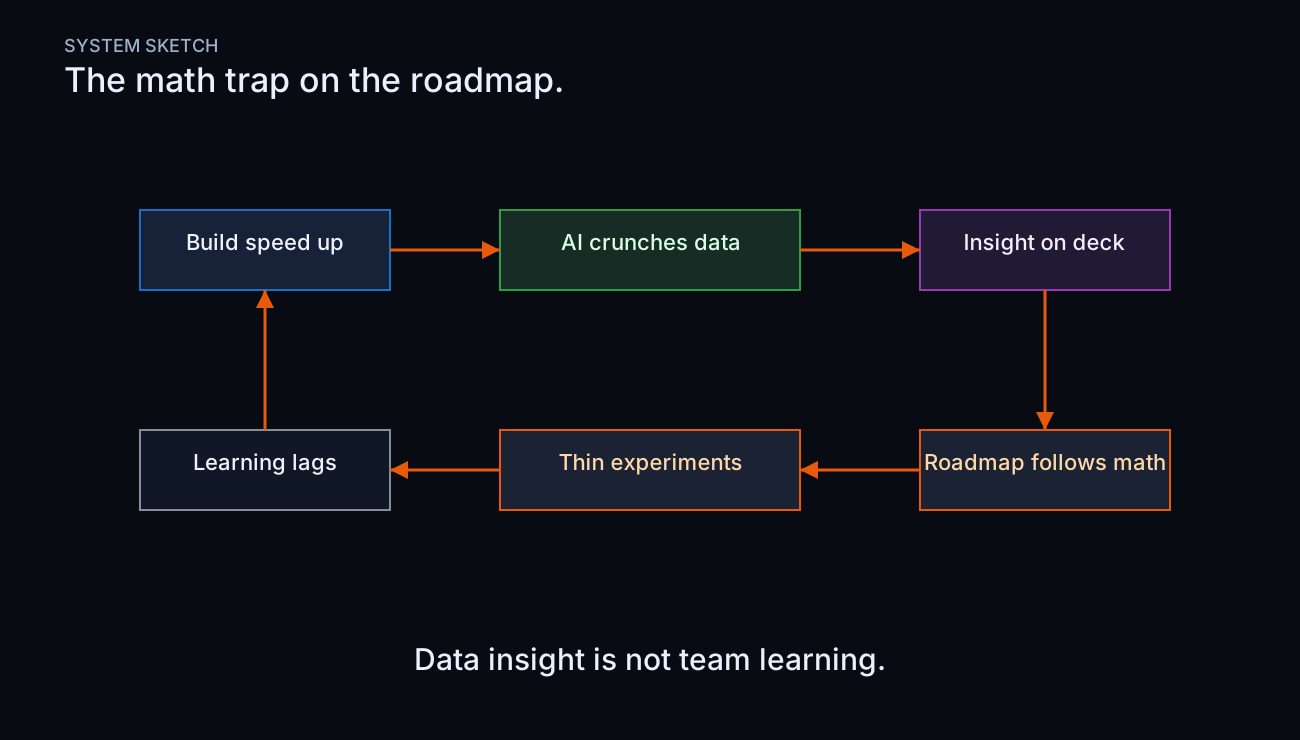
What is missing is the slower work: deciding what the signal meant, which assumption to stress next, and what evidence would actually change your mind. The rate of learning is the metric that survives when generation gets cheap. The teams that win are not the teams that produce the most charts. They are the teams that compound conviction from evidence.
When experiment data is messy, skewed, or thin, models still output confident synthesis. The loop in the diagram is the risk: fast motion, thin learning, repeated rework. You move before the team has adopted anything worth calling a learning.
The compass and the captain
In Why moving fast isn't enough, we used Autopilot and Pilot to describe System 1 and System 2: fast defaults versus deliberate evidence checks. Under AI, that split shows up in product work in a more concrete way.
Think of your favorite GPS navigation app.
The AI is the compass. It runs formulas on real-time data and tells you which route is statistically faster. Useful. Fast. Confident. In the earlier frame, this is the scaled Autopilot: pattern match on whatever data the model can see.
You are the captain. Same job as the Pilot. You hold tacit knowledge the map never sees: the meeting that moved, the partner who will not sign on a Friday, the regulatory nuance that never made it into the dataset, the channel your team just unlocked that was not in the original hypothesis. Polanyi called this kind of knowing tacit knowledge: context you use without being able to fully spell it out for an algorithm.
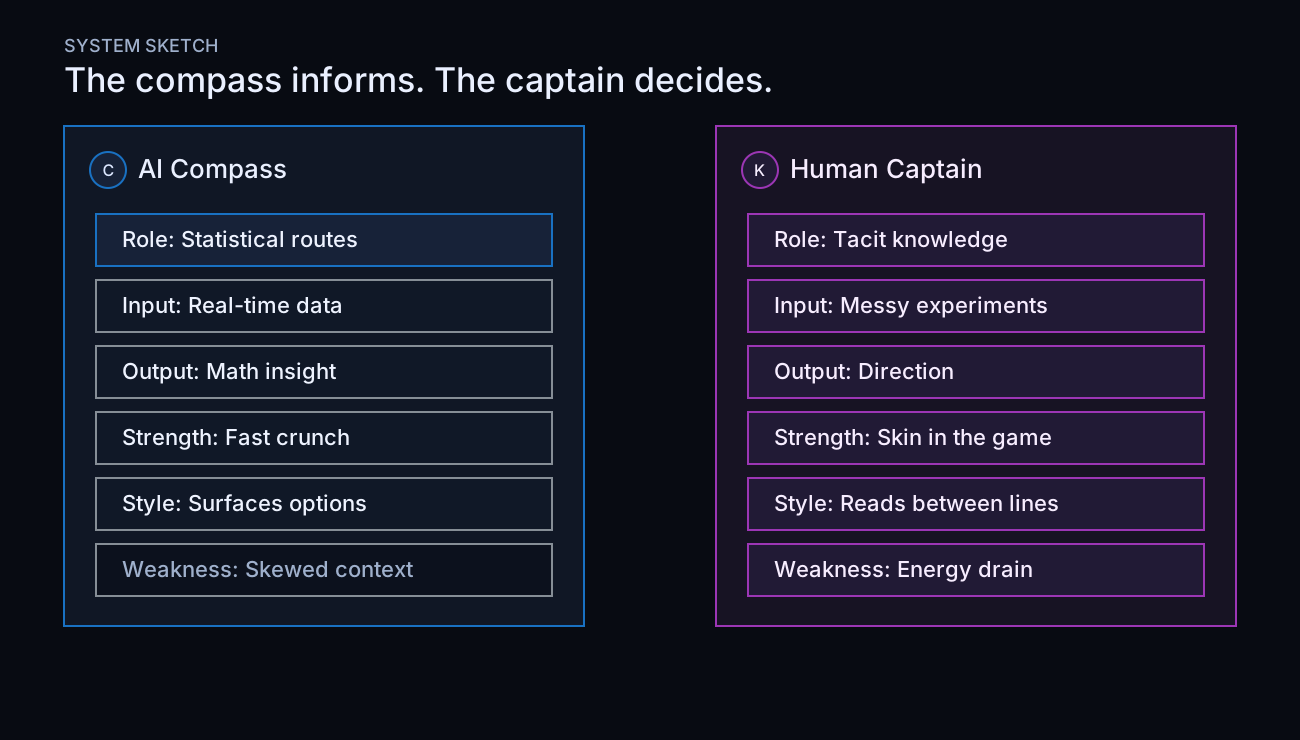
When experiment data gets messy, that gap shows up fast. Early-stage teams veer off-plan. They access different resources than they assumed in the experiment design. The signal in the spreadsheet is thin or skewed. The compass still outputs a clean recommendation.
Someone with skin in the game (time, money, reputation on the line) has to read between the lines and decide what is worth changing. Without that ownership, experiment data is easy to over-trust: it looks authoritative on a slide, but it may not be reliable enough to bet the company on. If the system only sees a slice of context, it will surface skewed outputs.
The compass informs. The captain decides. Autopilot suggests a heading. The compass suggests a route. Only the captain decides whether either one is right for this voyage.
That boundary is not anti-AI. It is how you avoid substituting motion for judgment.
Generating an insight is not learning
An AI system can synthesize experiment data and propose predictors. That output can be useful. It is still not a learning until a human internalizes it and chooses what to change.
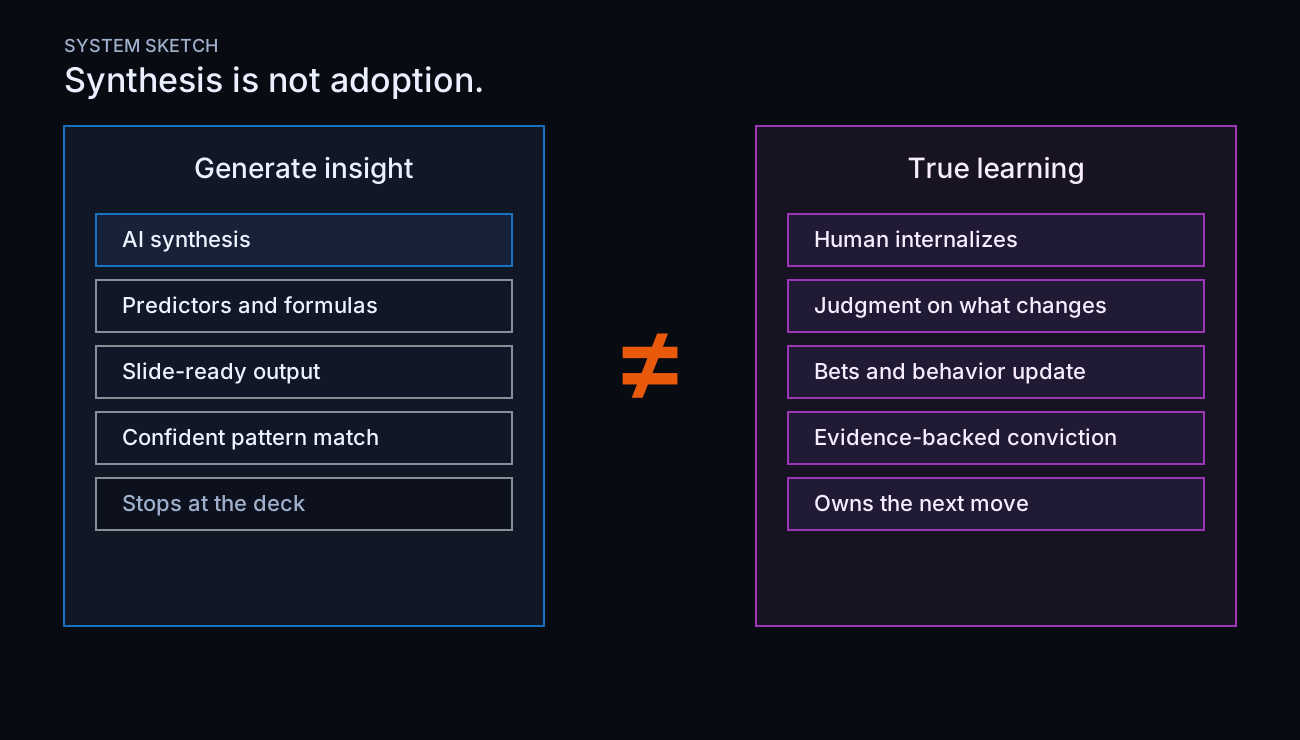
Teams confuse the two when insights land in decks but bets stay the same. Synthesis is not adoption. Learning shows up when assumptions, experiments, or direction actually move.
That is why the math and the judgment must stay separate. The AI can draft factual observations and candidate insights from locked experiment data. The human must review, edit, and approve them before those takeaways become durable project state. No learning row should exist because a model summarized a spreadsheet on its own.
A vision-led approach is not automatically reckless. It becomes reckless only when you lack a structured way to evaluate ideas. Let models crunch and summarize. Keep ownership of what the team will do next.
A shared brain for the loop
Human innovators should keep final authority. The analytical work required for high-quality choices still drains energy. Teams need organizational System 2: something that lowers cognitive load without stealing judgment.
SwiftCNS is that shared brain, implemented as compass plus captain. The system runs synthesis, structure, and the loop. You keep the judgment calls the Pilot was always responsible for. An AI coordinator maps assumptions, helps design experiments, and runs post-experiment synthesis. The loop has two connected parts:
Set up the bet: idea → assumptions → hypotheses → experiments.
Close the cycle (the new synthesis path): experiments → insights → gate → learnings → go, pivot, or kill.
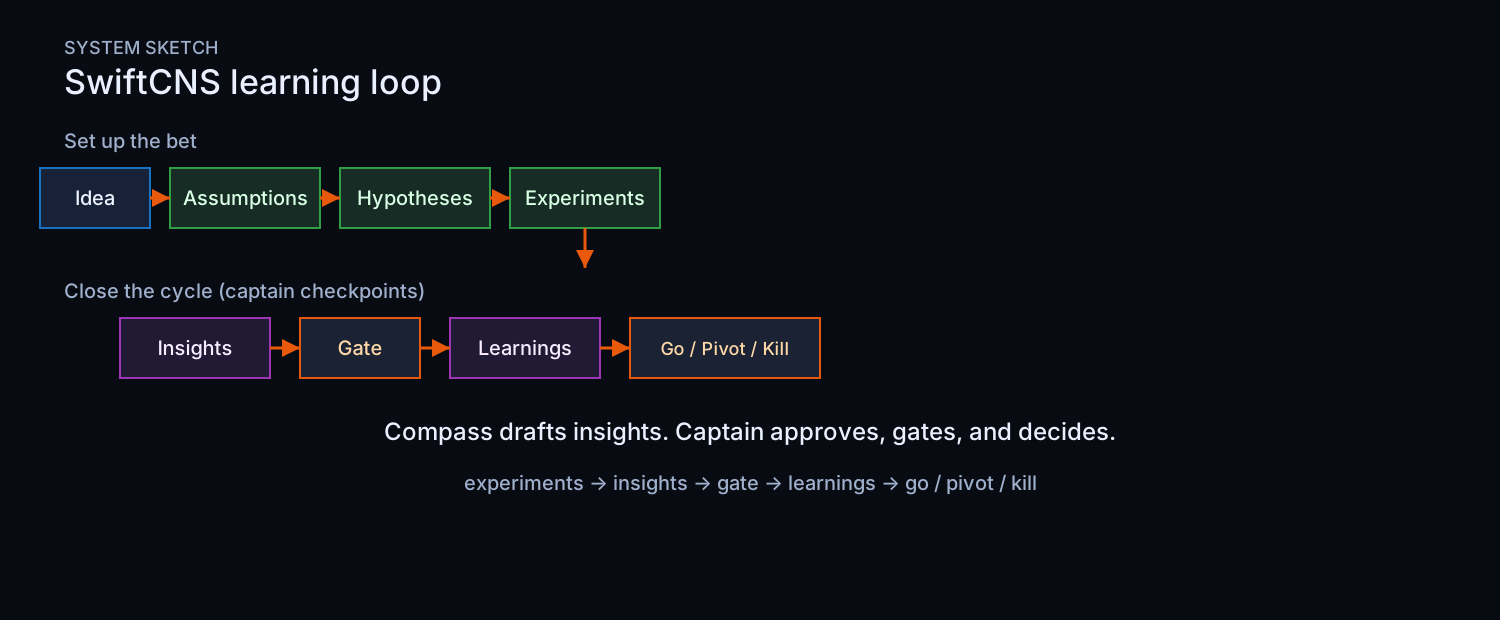
The shift is deliberate. Insights come before learnings, not after. The AI compass drafts observations and candidate insights from locked tracker data. You approve those takeaways first. Only then does the system ask whether evidence is strong enough to record a learning at all.
That is the gate. If the answer is no, SwiftCNS recommends branching a follow-up experiment instead of forcing a slide-ready conclusion. If the answer is yes, structured learning Q&A captures your tacit context: what you are actually learning, which assumption changed, and how confident you are.
The cycle closes with a validated learning and a persisted decision: go (persevere on the bet), pivot, or kill. That verdict is a first-class record linked to the learning, not a buried chat line.
SwiftCNS acts as the compass through synthesis and gating. Your role as captain stays intact at every checkpoint.
We are working toward a future where AI has enough real-world context to act as a true venture autopilot. That longer trajectory is on the SwiftCNS thesis page. Today the contract is narrower: compass informs, captain decides. For why base LLMs scale the Autopilot trap, see Why moving fast isn't enough.
What this means for you
Test more. Learn faster. Decide with evidence.
If you are Startup or Scaleup we are recruiting a small early access cohort for teams that want fast & structured innovation loops without giving up judgment on what to change.